
Free Acidity
Laboratory Measured
Free acidity is expressed as the amount of free fatty acids, calculated as oleic acid, in 100 g of olive oil. For example, 0.2% free acidity means 0.2 g of free fatty acids (expressed as oleic acid) per 100 g of oil.

WHAT FREE ACIDITY TELLS YOU
Inside a healthy olive still on the tree, the fats are neatly held together. At that point, acidity is almost zero. Nothing has gone wrong yet.
If an olive falls, gets bruised, or sits too long in warm crates before pressing, the fruit starts to break down. Natural enzymes then split the fats and release free fatty acids. The longer the wait between picking and pressing, the higher the acidity goes.
The simple rule:
Low acidity is not something added to the oil. It is proof that the olives were handled carefully and pressed quickly.
High acidity usually means older or damaged fruit.
Ultra-low acidity such as Juicy Olive’s ≤0.2%, reflects the exceptional condition of the fruit and careful handling throughout production.
TASTE & FREE ACIDITY
No. Free acidity isn't sourness, and you cannot reliably determine it by taste.
Free Acidity
Free acidity is expressed as the amount of free fatty acids, calculated as oleic acid, in 100 g of olive oil. For example, 0.2% free acidity means 0.2 g of free fatty acids (expressed as oleic acid) per 100 g of oil.
Peppery ≠ Acidity
That peppery sensation isn't acidity. Bitterness and pepperiness in early harvest EVOO are associated with naturally occurring phenolic compounds.
Extra Virgin Olive Oil
Extra virgin olive oil must meet both chemical and sensory requirements. Free acidity must be ≤0.8%, but acidity alone does not determine whether an olive oil is extra virgin.
WHY LOW FREE ACIDITY MATTERS
Free acidity is primarily a measure of olive and production quality. Exceptionally low levels indicate that very little breakdown of the olive’s natural fats occurred before pressing.
HEALTHY FRUIT
Free fatty acids increase when olives are damaged or begin to deteriorate. Very low free acidity is therefore associated with healthy, intact olives and minimal breakdown before pressing.
RAPID PROCESSING
Once olives are harvested, bruising, heat and processing delays can increase the formation of free fatty acids. Pressing quickly helps preserve naturally low free acidity.
CAREFUL HANDLING
Gentle harvesting, careful transport and controlled handling help protect the olives from damage and deterioration before they reach the press.
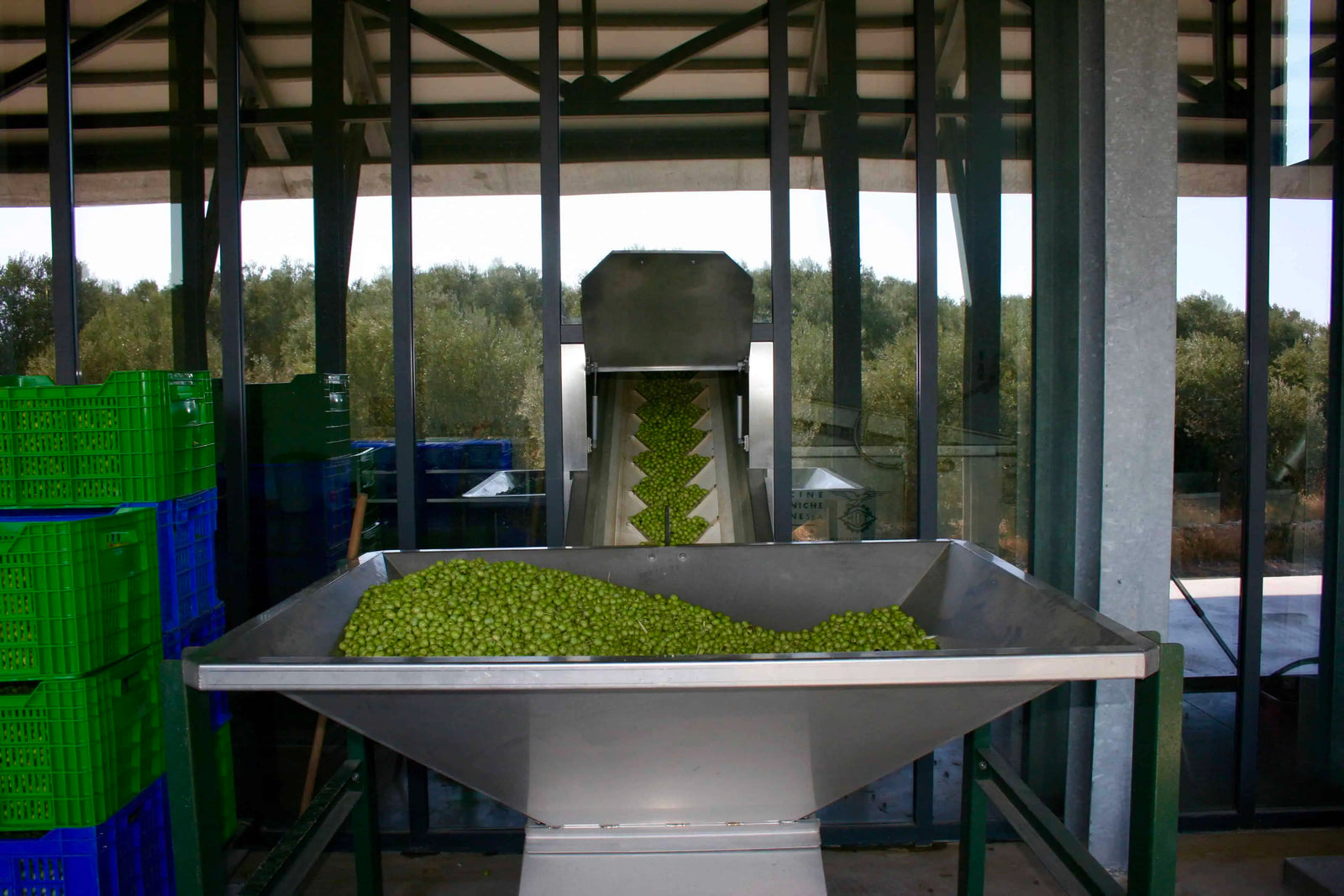
FROM HARVEST TO PRESS · WITHIN 2 HOURS
CAREFULLY HARVESTED: Our early-harvest green olives are picked directly from the tree and carefully handled to minimize bruising and fruit damage.
PRESSED WITHIN 2 HOURS: The olives move from harvest to pressing within two hours, minimizing the time available for deterioration before oil production.
PRESSED AT THE FARM: Our mill is located at the farm, reducing transport and storage time between harvest and pressing.
The result: extra virgin olive oil with free acidity as low as ≤0.2%. From tree to press, every minute matters.
Our olives are cold pressed at our grove within 2 hours of harvest, helping preserve their fresh aromas and naturally occurring polyphenols.
UV-protective dark glass helps shield extra virgin olive oil from light, helping preserve its freshness, flavor, and quality over time.
Our earliest-harvest profile achieves ≤0.2% free acidity, reflecting excellent olive condition and careful handling from harvest to pressing.


ORGANIC · SINGLE-ORIGIN · EARLY HARVEST
Juicy Olive is crafted from organic early-harvest olives and cold pressed within 2 hours. Careful handling and rapid pressing help achieve free acidity as low as ≤0.2%, alongside naturally high polyphenols and the distinctive character of early-harvest EVOO.
REGULATORY COMPLIANCE NOTE (EU COMMISSION REGULATION 432/2012)
Acidity in olive oil does not mean sourness or pH. It measures free fatty acids (FFA), expressed as a percentage of oleic acid. Lower free acidity generally reflects healthy fruit and careful handling, while damaged fruit or delays before pressing can increase it.
No. Free acidity does not taste sour and cannot be accurately judged by taste alone. Bitterness, pepperiness, aroma and texture come from other components of the oil. The exact free-acidity level is determined by laboratory analysis.
Extra virgin olive oil must have free acidity of 0.8% or lower, expressed as oleic acid, and must also meet additional chemical and sensory standards.
Very low free acidity generally indicates healthy, undamaged olives and careful handling before pressing. Damage, deterioration and delays after harvest can increase free fatty acids. However, acidity is only one measure of extra virgin olive oil quality.
Exceptionally low free acidity requires healthy olives, careful harvesting and rapid processing. Juicy Olive cold presses its olives within 2 hours of harvest, helping our Fruity & Full-Bodied profile achieve free acidity of ≤0.2%.
Free acidity and polyphenols measure different qualities. Free acidity reflects the condition of the olives and how carefully they were handled before pressing—lower levels generally indicate healthier fruit and less deterioration. Polyphenols are naturally occurring bioactive compounds that contribute to bitterness, pepperiness and antioxidant activity.
Juicy Olive combines low free acidity with 440–840 mg/kg polyphenols, depending on the harvest profile.
Not necessarily. Low free acidity mainly reflects the condition of the olives and their handling before pressing. How well olive oil keeps over time also depends on polyphenols, oxygen, light, heat, packaging and storage.
Extra virgin olive oil must have free acidity of 0.8% or lower. Within that range, lower levels can indicate healthier olives and careful handling before pressing. Around 0.5% is notably low, while 0.2% is exceptionally low and generally requires excellent fruit condition, careful harvesting and rapid processing.
Free acidity is measured in a laboratory and expressed as free fatty acids calculated as oleic acid. 0.2% free acidity means approximately 0.2 g of free fatty acids, expressed as oleic acid, per 100 g of olive oil.
Refined olive oil can have very low free acidity because free fatty acids are removed during refining. In virgin and extra virgin olive oil, which are produced without refining, naturally low free acidity provides more meaningful information about the original fruit and its handling.