
Certificates of Analysis & Chemical Purity
"The number tells you more than the marketing phrase." We publish empirical laboratory test results for every harvest batch.
Current Harvest Batch Verification Table
Independently verified laboratory analytical measurements:
| Harvest Expression | Harvest Timing | Total Polyphenols | Free Acidity (FFA) | Peroxide Value | Product Link |
|---|---|---|---|---|---|
|
Fruity & Full-Bodied The Wellness Standard |
Early August | 840 mg/kg | ≤ 0.20% | < 7.0 meq O₂/kg | View Oil → |
|
Mild & Flavorous The Balanced Choice |
Mid-August | 620 mg/kg | ≤ 0.30% | < 7.0 meq O₂/kg | View Oil → |
|
Relish & Smooth The Smooth Choice |
Early September | 440 mg/kg | ≤ 0.50% | < 7.0 meq O₂/kg | View Oil → |
Fruity & Full-Bodied
The Wellness StandardMild & Flavorous
The Balanced ChoiceRelish & Smooth
The Smooth ChoiceHow We Quantify EVOO Quality
Total Polyphenols (HPLC & Folin)
Biophenols are the natural antioxidants responsible for throat pepperiness (oleocanthal). We quantify total biophenols via high-performance liquid chromatography and Folin-Ciocalteu assay.
Free Acidity Titration (ISO 660)
Measures broken triglyceride chains. Low acidity indicates fresh, undamaged olives pressed instantly. Our early harvest measures ≤0.20% FFA—one quarter of the IOC legal ceiling.
Peroxide & Oxidation Defense
Quantifies primary oxidative degradation. By settling our oil under stainless steel nitrogen blankets without industrial heat or paper bleaching, peroxide remains strictly under 7 meq O₂/kg.
Official Organic Certification Seals
All Juicy Olive groves, pressing facilities, and bottling lines operate under certified organic supervision complying with US and European Union agricultural guidelines.
 USDA Organic
NOP Verified
USDA Organic
NOP Verified
 EU Organic
Euro-Leaf Certified
EU Organic
Euro-Leaf Certified
 ECOCERT
Organic Processing
ECOCERT
Organic Processing
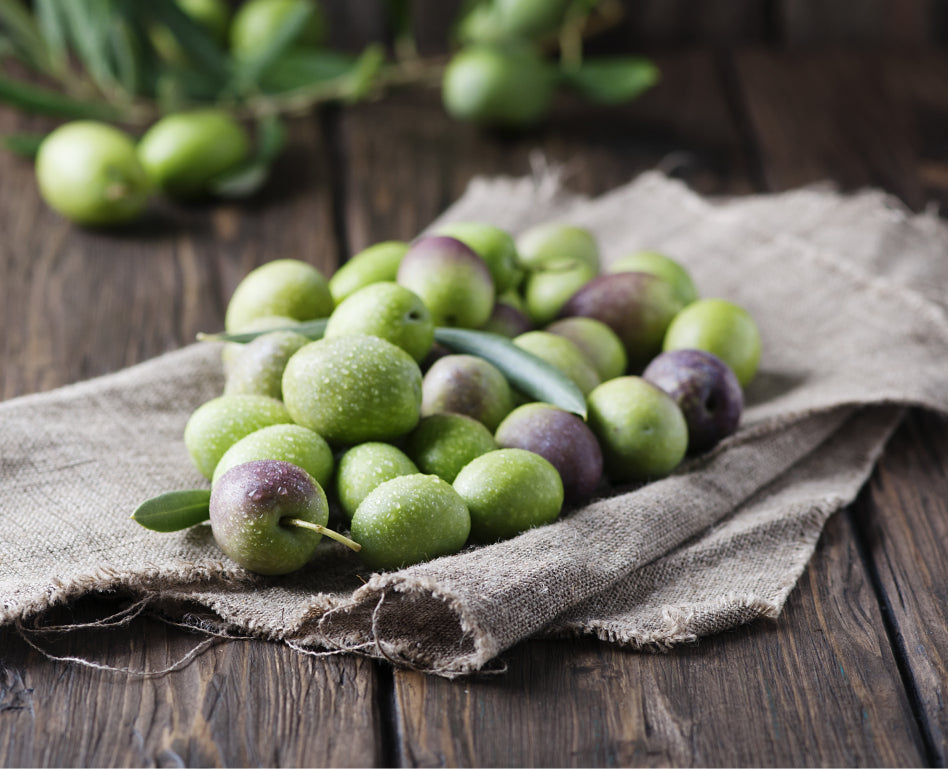
Certified Organic Extra Virgin Olive Oil
CERTIFICATIONS
We believe in sustainability, nature compatibility and an organic future. These promises are not just claims, we have certified them to provide assurance and verification.


EOS | Eu Organic Certification
The EU organic certification gives a coherent visual identity to European Union produced organic products. This makes it easier for consumers to identify organic products and helps farmers to market them across the entirety of the EU.
The organic certification can only be used on products that have been certified as organic by an authorized control agency or body. This means that they have fulfilled strict conditions on how they must be produced, processed, transported and stored.


USDA | U.S Department of Agriculture
The National Organic Program (NOP), part of USDA’s Agricultural Marketing Service (AMS), oversees and enforces the integrity of the rigorous USDA organic standards and the accreditation of organic certifiers.
Organic is one of the most heavily regulated and closely monitored food systems in the U.S. Prescriptive regulations cover the growing, handling, and processing of organic fresh produce and other foods. Any product labeled as organic must be USDA certified.


ECOCERT | Organic Certification Organization
For nearly 30 years, ECOCERT has and continues to assist stakeholders in the implementation and promotion of sustainable practices through certification, consulting and training services. Committed to organic farming since its creation, Ecocert has now extended its efforts to many other sectors.
ECOCERT strives to enable production processes that respect the environment, better management of available energy and of natural resources (water, air, soil fertility), socially responsible sectors, and better product quality and safety. All of these elements are essential to address today's economic, social and environmental challenges in order to build tomorrow's world.