
Above 35°C (95°F)
Cooked and heavy
Too much heat can dull the fresh fruit aroma. The oil often tastes flatter and greasier, with a cooked note and little of the lively peppery finish.

HOW THE OIL IS MADE
Seed oils such as canola, sunflower and soybean are often produced using heat, solvents and refining. Extra virgin olive oil is different — it is obtained from olives by mechanical means.
At Juicy Olive, “single cold pressed” describes our own process: the olive paste is pressed once, at a controlled low temperature, with no second extraction and no chemical solvents.
What happens after pressing matters too. Many large-scale producers filter the oil immediately through fine paper or cellulose filters to achieve clarity quickly.
We choose a slower path. Instead of forcing the oil through filters, we let it rest in dark, cool stainless-steel tanks, where the tiny natural fruit particles gradually settle on their own. This is natural gravity decantation.
By minimizing extra handling and allowing time to clarify the oil naturally, we aim to retain more of the fresh aroma, green character and sensory personality of the harvest.
The simple rule:
Think of freshly squeezed orange juice. Heat and heavy processing change its fresh character. We take the same approach with olive oil: press once, keep it cool, and let it settle naturally.
TEMPERATURE AND FILTRATION
How hot the press is — and how the oil is cleared — changes the taste. Cooler extraction and gentle settling usually keep more freshness. Higher heat and heavy filtering can make the oil taste flatter.
Above 35°C (95°F)
Too much heat can dull the fresh fruit aroma. The oil often tastes flatter and greasier, with a cooked note and little of the lively peppery finish.
27°C cold pressed
This is the usual legal limit for “cold” extraction. When the oil is also forced through tight paper filters, it looks very clear, but some of the fresh herbal aroma and texture can be reduced.
Below 22°C (71.6°F), our craft method
Pressed cooler and left to settle naturally. The taste is closer to freshly crushed green olives, with a gentle bitterness and a smooth, clean finish.
PRESSING TEMPERATURE
The temperature at the mill changes how much fresh aroma the oil keeps. Lower heat is gentler. Higher heat can make the oil taste flatter.
01 · In the grove
18–20°C
Morning-picked olives are still naturally cool when they arrive from the trees.
02 · Our mill
Below 22°C
The paste is milled once in a cold-water jacketed press, so the oil stays cool and keeps more of its fresh green character.
03 · Legal “cold pressed” limit
27°C
This is the usual maximum temperature allowed for a “cold pressed” label.
04 · Hotter bulk milling
Above 35°C
Some large mills use higher heat to squeeze out more liquid. That extra heat can dull the fresh aroma.
COLD PRESSING & NATURAL SETTLING
How a cool single press and slow settling help keep extra virgin olive oil fresh and aromatic.
Fresh aroma
The smells of cut grass, tomato leaf, and green artichoke come from delicate aroma compounds. These fade more easily when the paste gets too warm. Pressing below 22°C helps keep more of that fresh, green character in the oil.
Natural settling
Tight paper filters and high pump pressure can push the oil clear very fast, but some of the natural fruit particles and aroma can be reduced along the way. Gravity decantation is slower. The heavier particles settle on their own over time, so the oil clears without being forced through tight filter pads.
Freshness in the lab
We minimize heat and oxygen throughout production to limit early oxidation. A low peroxide value in laboratory analysis helps confirm the oil’s chemical freshness.
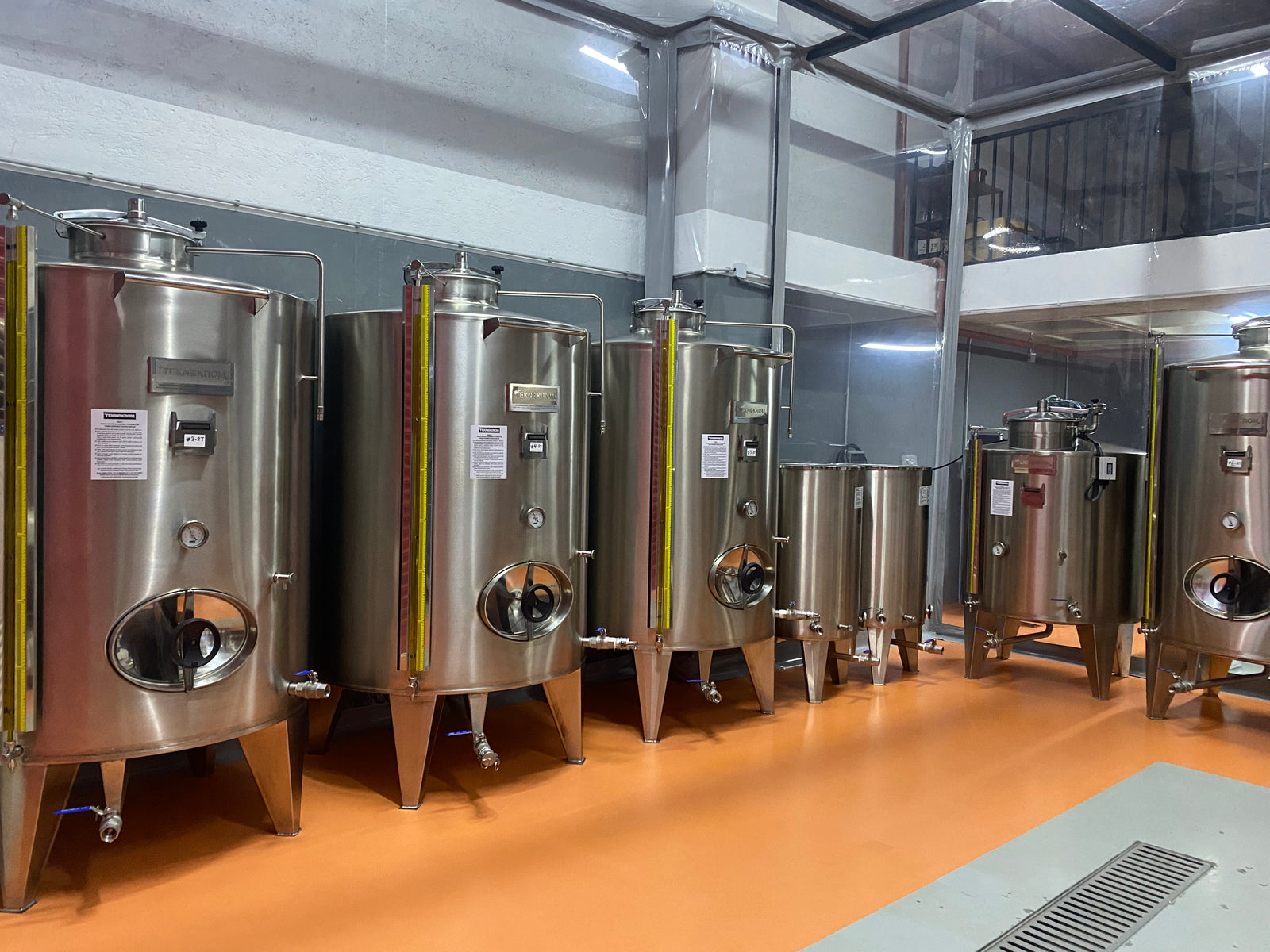
NATURAL GRAVITY RACKING
16°C TEMPERATURE-CONTROLLED TANKS: Freshly pressed oil rests in 16°C sealed stainless tanks under a protective nitrogen blanket.
3–4 WEEKS OF NATURAL SETTLING: Gravity gently draws heavy olive fruit pulp down to the cone bottom over 3 to 4 weeks.
GENTLE RACKING: Clear, nutrient-dense oil is racked off the top into dark UV-protective glass bottles—pure, unfiltered, and unstripped.
No rush. No forced filtration. Just 16°C, protected storage, time and gravity.
Our olives are cold pressed at our grove within 2 hours of harvest, helping preserve their fresh aromas and naturally occurring polyphenols.
UV-protective dark glass helps shield extra virgin olive oil from light, helping preserve its freshness, flavor, and quality over time.
Our earliest-harvest profile achieves ≤0.2% free acidity, reflecting excellent olive condition and careful handling from harvest to pressing.


EARLY-HARVEST CHARACTER
Pressed once below 22°C, without solvents or refining, then slowly clarified by gravity. This is how we aim to preserve the vivid green aroma, gentle bitterness, peppery finish and naturally occurring polyphenols of our early-harvest olives.
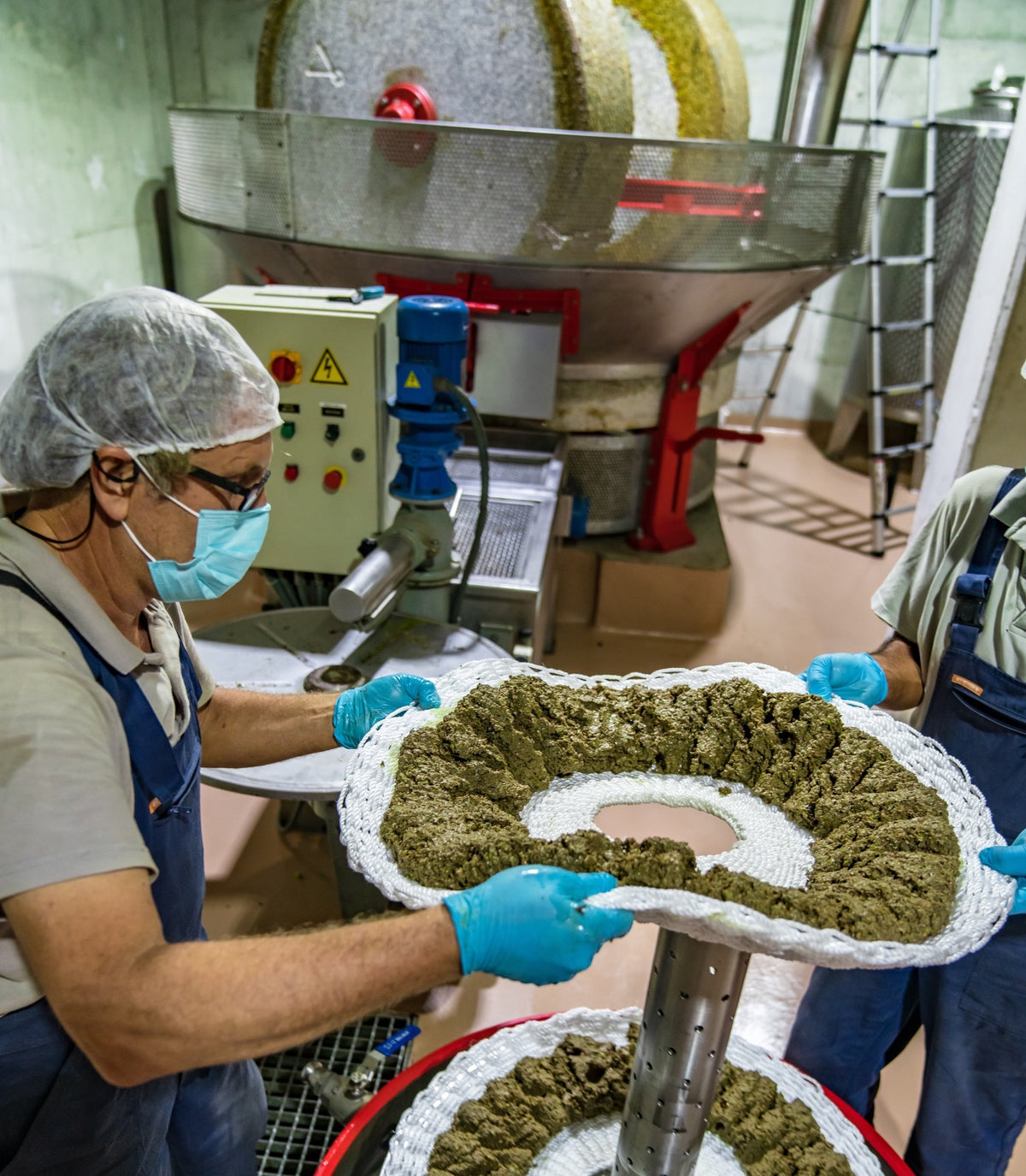
EXTRACTION REGULATORY NOTE (IOC & EU REGULATION NO 29/2012)
'Cold pressed' historically refers to traditional hydraulic presses using mat filters, while 'cold extracted' refers to modern closed continuous stainless steel centrifuges (decanters). Under EU Regulation 29/2012, both terms require extraction temperatures strictly below 27°C (80.6°F) without chemical solvents.
Temperature changes what we smell at the press. As olive paste gets warmer, some of the fresh green aromas can become softer and oxidation can accelerate. We choose to press below 22°C because those vivid aromas are exactly what we harvest our olives early for.
Freshly pressed olive oil is naturally cloudy. At Juicy Olive, we let it rest for 3–4 weeks in sealed stainless-steel tanks at 16°C under nitrogen. Gravity slowly pulls the heavier olive particles to the cone-shaped bottom, then the clear oil above is carefully racked away.
Natural gravity decanted olive oil preserves microscopic suspended fruit biophenols and delicate volatile aroma compounds that industrial cellulose paper filters strip away. Proper gravity decantation removes excess moisture while retaining rich culinary mouthfeel, raw flavor depth, and peak antioxidant potency.
No. True extra virgin olive oil is strictly the product of the first mechanical extraction. Residual pomace from the first press contains negligible oil that can only be extracted industrially using chemical solvents (like hexane) and extreme heat, creating low-grade refined 'pomace olive oil'.
Juicy Olive extracts its organic olive oils strictly below 22°C (71.6°F), significantly colder than the official 27°C European legal ceiling. This strict temperature threshold minimizes friction heat in the malaxer to ensure 100% enzyme and antioxidant stability.
Commercial supermarket brands use high-pressure cellulose paper filters because they make cloudy oil artificially clear in under 60 seconds, speeding up mass packaging logistics. However, paper filtration strips out subtle cloud phenolics and reduces flavor complexity compared to patient gravity settling.
Unfiltered decanted olive oil should be stored in dark, UV-protective glass bottles or stainless steel containers in a cool, dark pantry between 14°C and 18°C (57–64°F). Keep the cap tightly sealed after each use to protect the raw, living oil from oxygen exposure.