
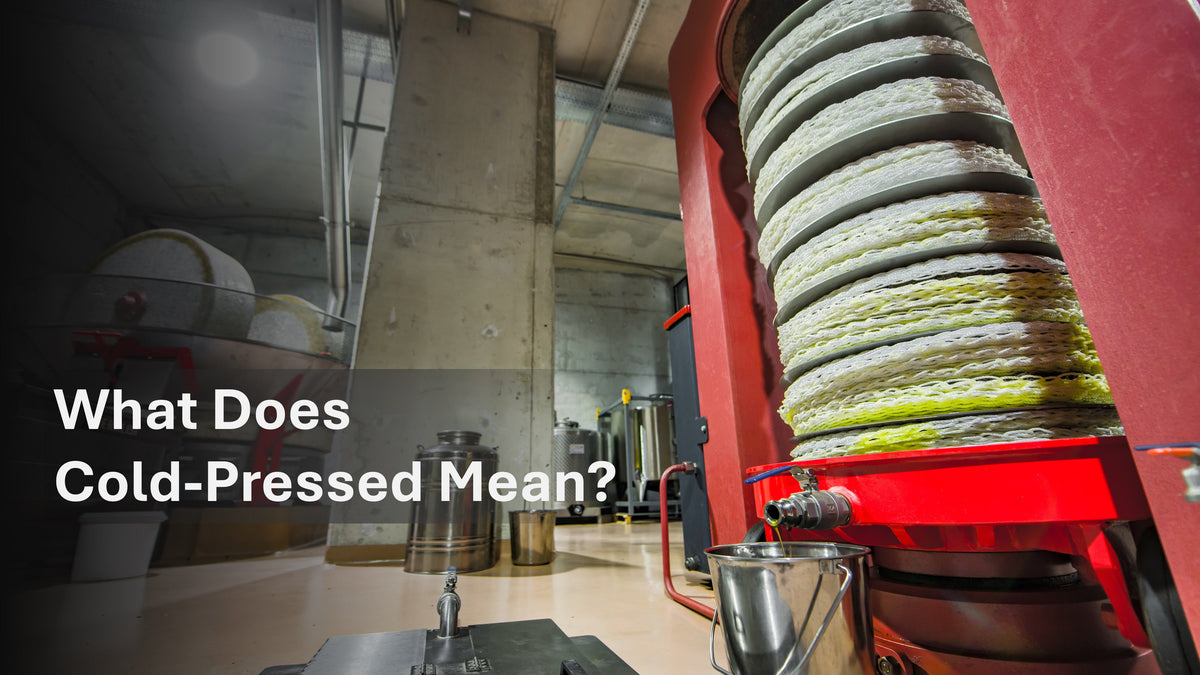
Cold-pressed olive oil is made by mechanically pressing olive paste at a controlled low temperature, without unnecessary heat.
Under EU rules, the more precise term first cold pressing applies to virgin or extra virgin olive oil obtained below 27°C by the first mechanical pressing of the olive paste using a traditional hydraulic press. EU Regulation 2022/2104, Article 10
Keeping the temperature low helps limit heat exposure and protect the olive oil’s natural aroma, flavor and delicate compounds.
Cold Pressing vs. Cold Extraction
There are two main low-temperature production methods used for virgin olive oil:
- First cold pressing = traditional hydraulic press, below 27°C
- Cold extraction = centrifugation or percolation, below 27°C
| Term | EU Status | How It Works | Temperature |
|---|---|---|---|
| First Cold Pressing | Official reserved term | First mechanical pressing using a traditional hydraulic press | Below 27°C |
| Cold Extraction | Official reserved term | Percolation or centrifugation of the olive paste | Below 27°C |
| Cold Pressed | Common consumer wording; not separately defined as an EU reserved term | Generally used to describe low-temperature pressing | No separate EU temperature rule under this wording itself |
Both first cold pressing and cold extraction can produce excellent extra virgin olive oil. The method alone does not determine quality.
Why Cold Processing Matters
Cold processing is one of the fundamentals we expect from a fine extra virgin olive oil.
Whether achieved through traditional first cold pressing or modern cold extraction, controlled low-temperature processing helps limit unnecessary heat exposure. Research on virgin olive oil processing also shows that malaxation conditions can influence phenolic composition and sensory quality. Review the research.
Cold processing is a foundation of fine EVOO—but it is not the only measure of quality.
Fruit quality, harvest timing, processing speed, storage and the final laboratory and sensory results still matter.
Does Cold Pressed Mean High Polyphenols?
No. Polyphenol levels also depend on olive variety, harvest timing, fruit condition, processing speed, oxygen exposure and storage.
If polyphenol content matters to you, look for an actual laboratory measurement rather than relying on the words “cold pressed.”
Does Cold Pressed Mean Extra Virgin?
No.
Cold pressed = how the oil was produced.
Extra virgin = the quality category of the finished oil.
A cold-pressed oil must still meet the required chemical and sensory standards to qualify as extra virgin. The International Olive Council classifies olive oils using both physicochemical and organoleptic criteria. IOC olive-oil definitions.
What Should You Look for When Buying Olive Oil?
Do not judge a bottle only by the words Cold Pressed. Look for the complete picture:
- Extra Virgin classification
- Fresh olives
- Harvest information
- Fast processing after harvest
- Controlled processing temperature
- Traceable producer and origin
- Laboratory results
- Verified certifications, such as organic certification
How Does Juicy Olive Use Cold Pressing?
Juicy Olive uses a traditional mechanical cold-press technique for its certified-organic, early-harvest extra virgin olive oils.
The olives are processed within approximately two hours of harvest, while the olive paste is kept below 22°C.

Cold pressing is one part of a broader production approach that also includes early harvesting, rapid processing, certified-organic production and careful storage.
Frequently Asked Questions
What does “first cold pressing” mean?
Under EU rules, it refers to virgin or extra virgin olive oil obtained below 27°C by the first mechanical pressing of olive paste using a traditional hydraulic press.
What does “cold extraction” mean?
Under EU rules, it refers to virgin or extra virgin olive oil obtained below 27°C by percolation or centrifugation of the olive paste.
Is “cold pressed” an official EU term?
The EU regulation specifically defines the reserved terms “first cold pressing” and “cold extraction.” “Cold pressed” by itself is common consumer wording, but it is not separately defined there as a reserved term.
Is cold pressing better than cold extraction?
Not necessarily. Both methods can produce excellent extra virgin olive oil when the fruit and the complete production process are carefully controlled.
The Bottom Line
Cold processing matters—but it is not a complete quality guarantee.
When choosing a fine EVOO, look beyond one phrase on the bottle:
Fresh fruit · Fast processing · Controlled temperature · Extra Virgin quality · Traceable origin · Laboratory proof
Cold processing helps protect what is already in the olive.
Quality starts with the fruit.
Related Juicy Olive Guides
Scientific & Regulatory References
European Union — Regulation (EU) 2022/2104, Article 10
International Olive Council — Olive Oil Designations and Definitions
Comments